Each card explains what the equipment is for, what to check before you start, and how it fits into a beginner routine.
Pin-loaded
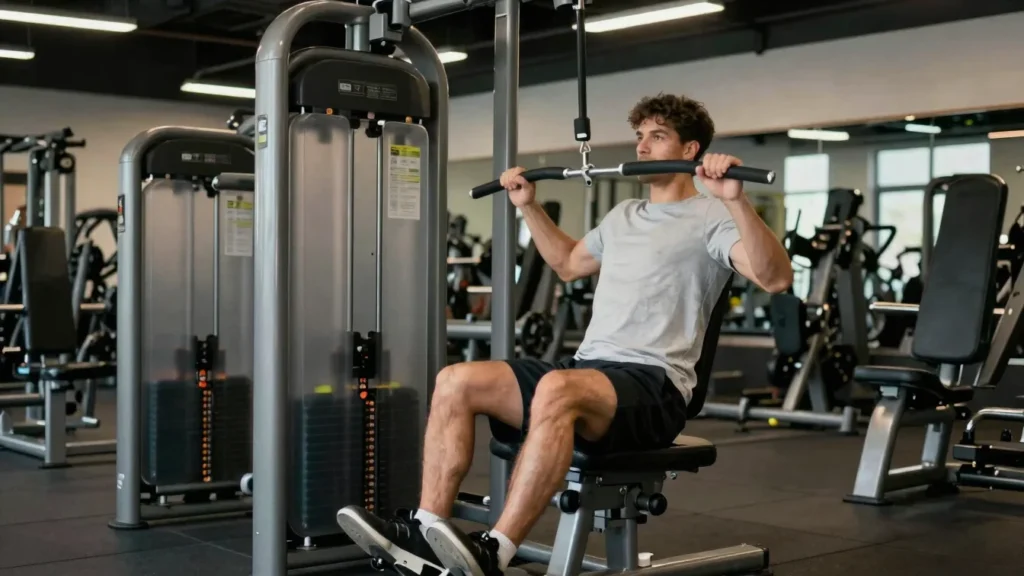
Pin-loaded machines
Adjust the seat so the handles line up with your chest or hips, select a light weight, and move through a controlled range. Machines guide the path, which makes them a practical first stop for learning patterns.
Cable rig
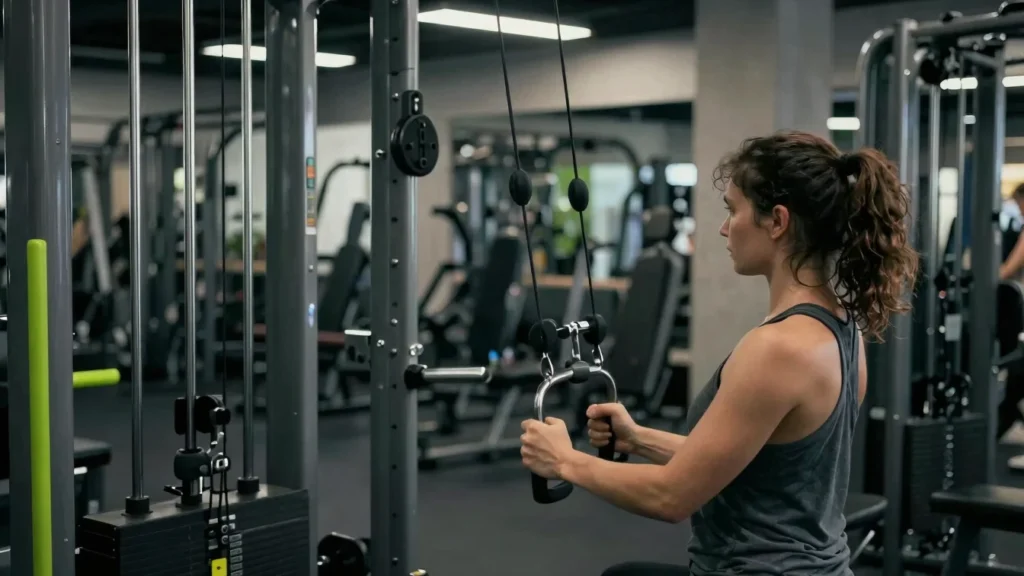
Cable stations
Cable machines keep tension on the muscle through the full movement. Set the pulley height first, then stand with a stable stance and move from your shoulders or hips rather than swinging the weight.
Free weights
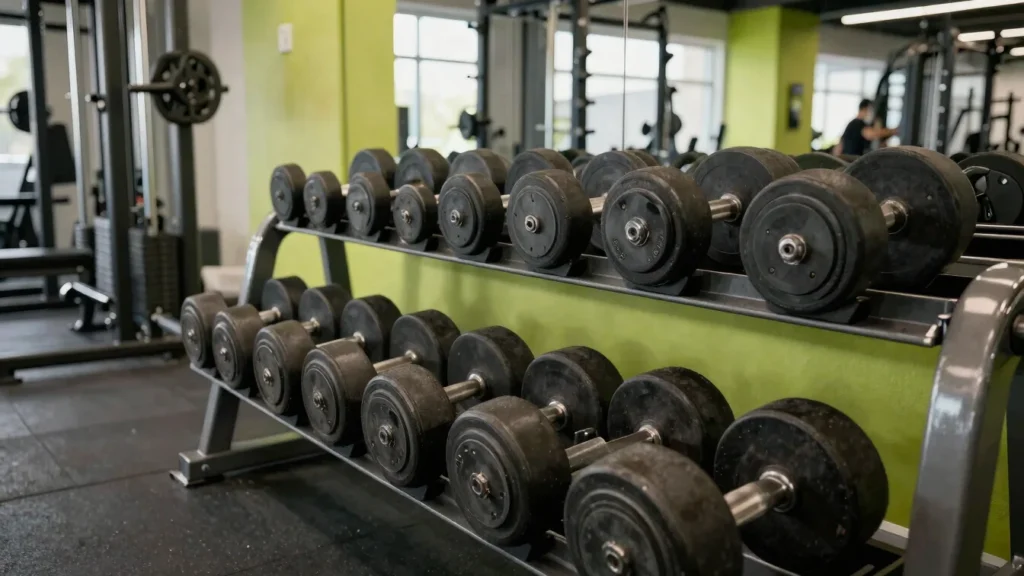
Free weight setups
Dumbbells, barbells, and racks let you choose your own path. Start with a weight you can control, use the rack's safety pins, and keep your body positioned over the bar or dumbbells throughout each rep.
Recommended gear
Accessories that support your training
Support
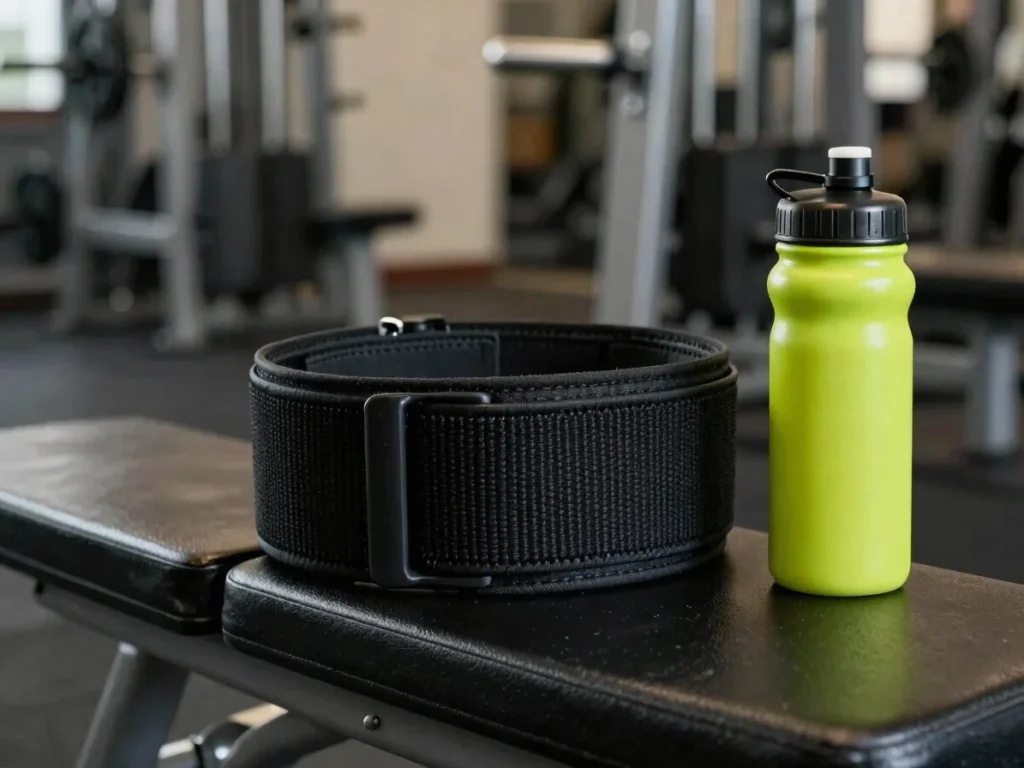
Lifting belts and straps
A lifting belt can help you brace for heavy work, and straps help you hold grip on pulling exercises. Most beginners do not need either right away; build your grip and bracing first, then add them when your training calls for it.
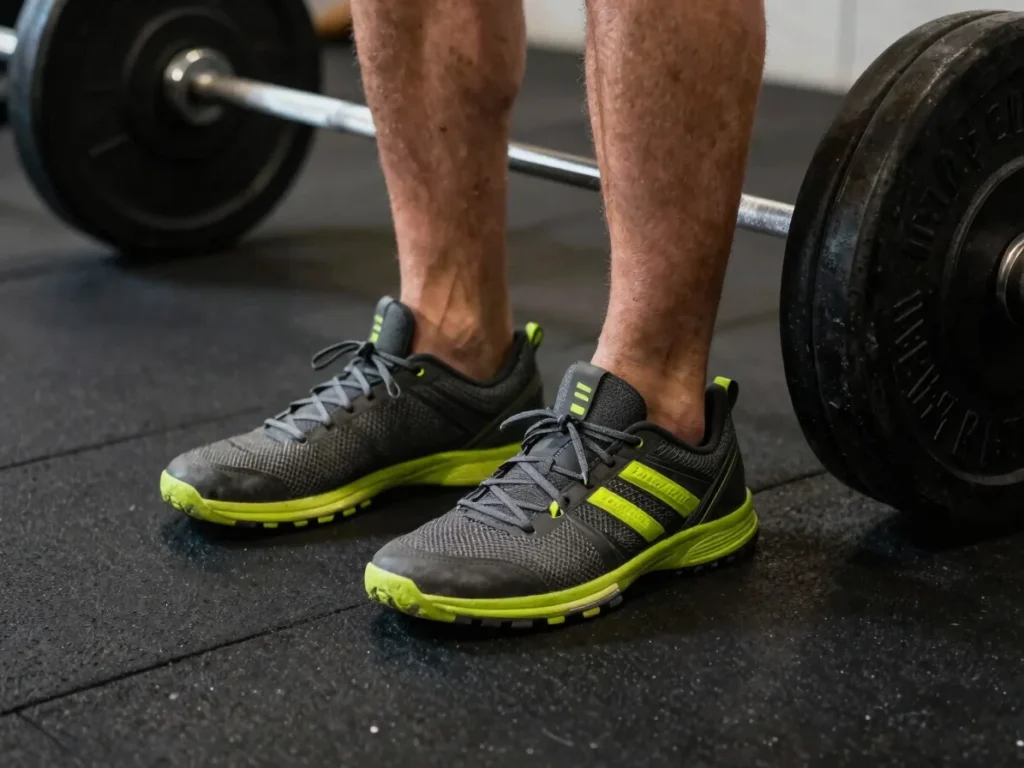
Flat, stable soles give you a solid base for squats and deadlifts. Running shoes with cushioned heels can shift your balance under load, so look for a firm, even sole and a secure fit.
A reusable water bottle and a simple protein source make training easier to sustain. Pair them with balanced meals rather than treating any single product as a shortcut.